

Why Vacant Properties Need Their Own Insurance Policy
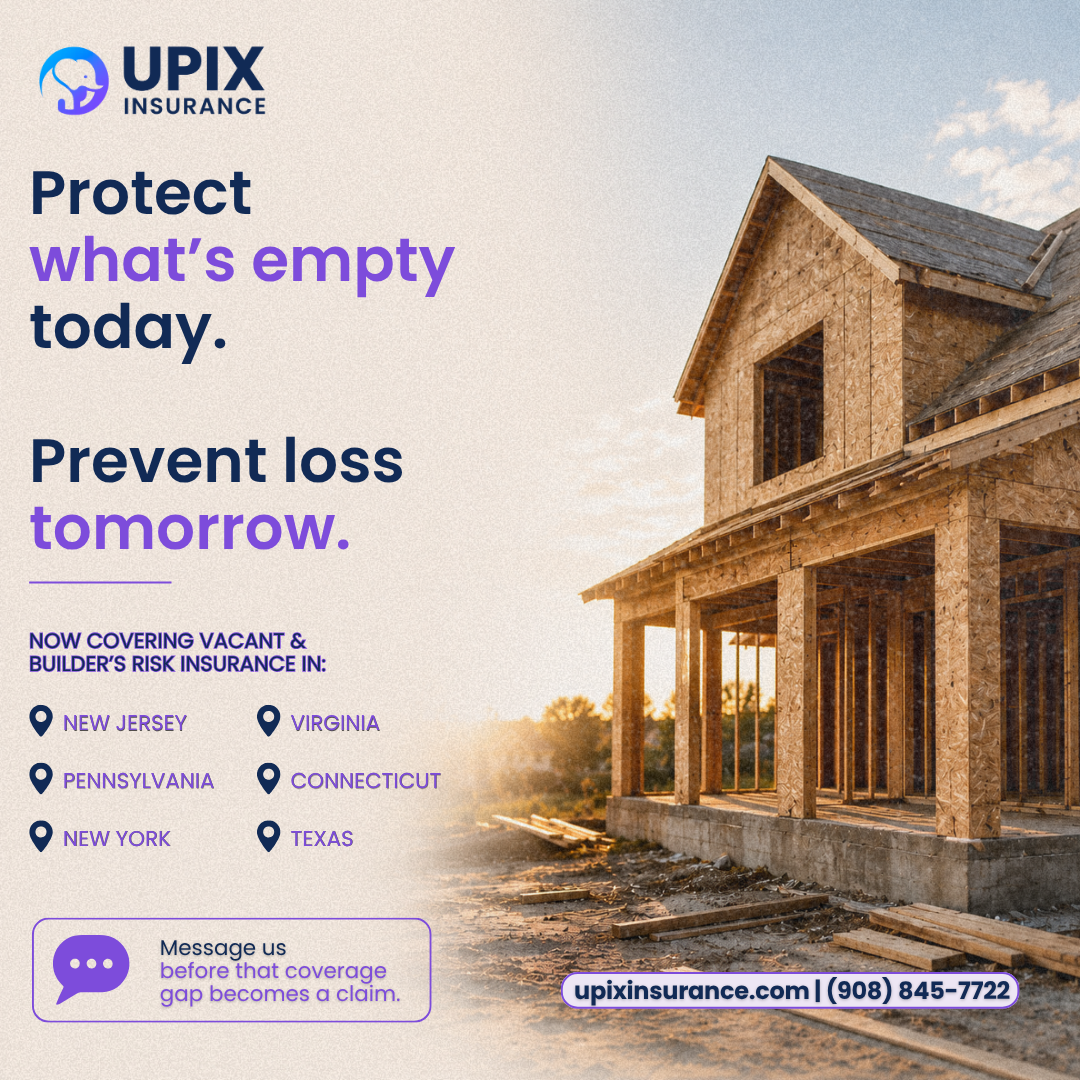
It seems counterintuitive, but an empty building is often riskier to insure than an occupied one. Vandalism, theft, and fire tend to go undetected longer without anyone present, and slow-developing problems — a burst pipe, a small electrical fire — can cause significantly more damage before anyone notices.
Because of that risk, most standard property policies include a vacancy clause: once a building sits empty past a certain number of consecutive days (often 30 or 60), coverage can be reduced or voided entirely. That's a gap that catches a lot of property owners off guard, especially between tenants or during a slow renovation.
Builder's risk insurance addresses a related but distinct situation — a property under active construction or major renovation, where the structure, materials, and equipment on-site need coverage before the project is complete and a standard policy would even apply.
UPIX now writes vacant property and builder's risk coverage across New Jersey, New York, Connecticut, Pennsylvania, Virginia, and Texas. If you have a property sitting empty right now, or a renovation in progress, it's worth confirming you're not relying on a policy that's already stopped covering you.
