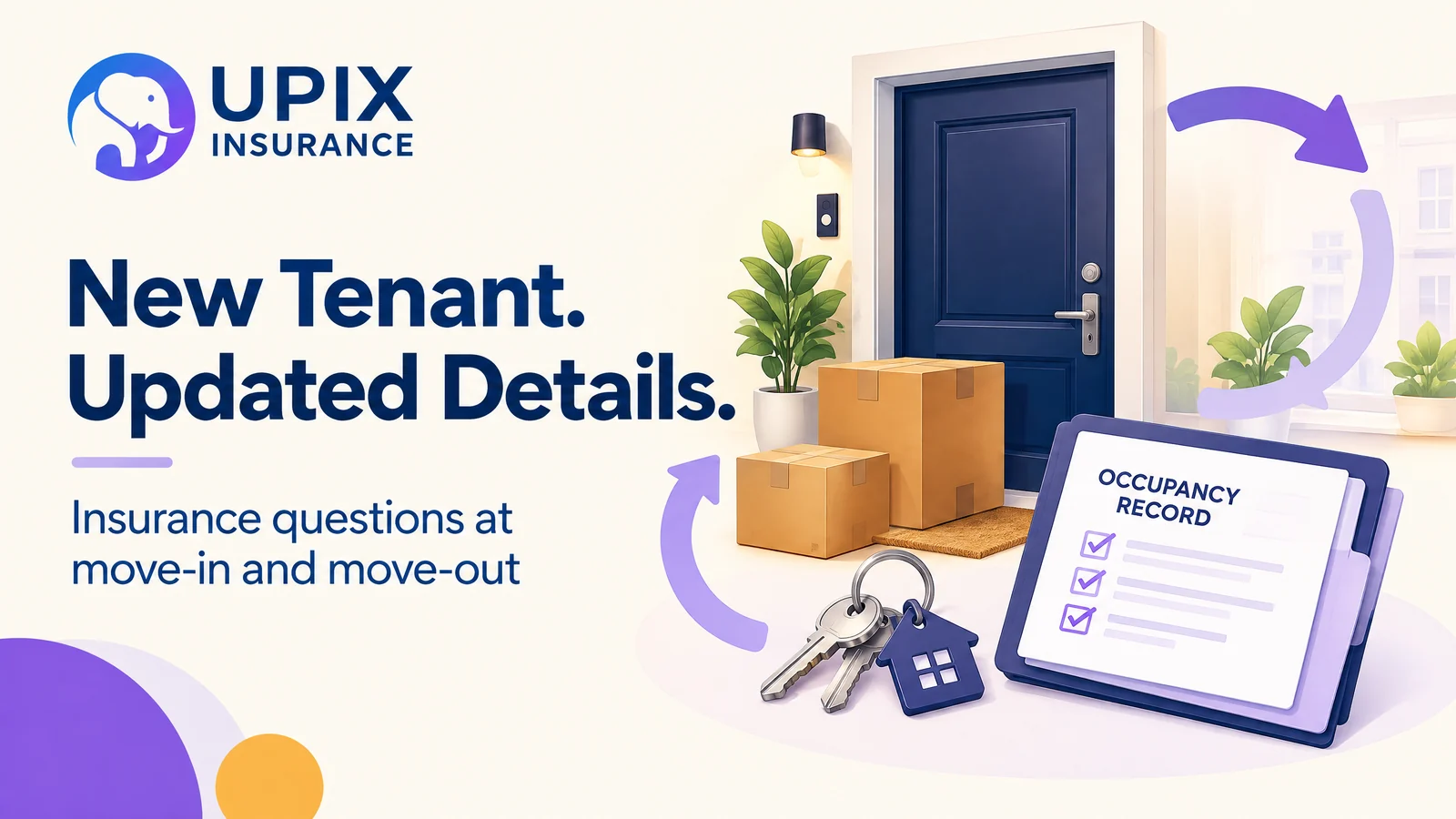
Put insurance on the turnover checklist
When a tenant moves out, owners often focus on cleaning, repairs and finding the next renter. Add an insurance update to the same list. Tell your agent whether the unit or entire building will be empty and whether any substantial work is planned.
Document what changes
Record the move-out date, expected rental date and condition of the property. Inspect entrances, locks and any reported problems. Keep photos and repair invoices in the property file. If a new tenant will use the space differently, explain that before the activity begins.
Review again when the tenant arrives
Confirm that the policy still describes the building accurately. Encourage the tenant to review renters insurance for their own needs and provide any lease-related requirements through the appropriate process. Do not assume a certificate or a tenant’s policy changes your coverage. If occupancy, ownership or property use is unclear, resolve the question with your agent. A short conversation during turnover can help prevent an outdated application from following the property into the next rental period.
Notify UPIX Insurance about upcoming tenant changes and request an occupancy review. Call UPIX Insurance at (908)845-7722.
Request an insurance quoteCoverage is subject to policy terms, limits, exclusions and insurer eligibility.